
Everyone is an engineer now
Posted by Jacob Simon on
Do software engineers belong on the endangered species list? You'd think so, based on the headlines from the last couple of years. From "the computer science bubble is bursting" in The Atlantic, to "coders are seeking fast food jobs" in The New York Times, the extinction of the engineer sounds inevitable.
Yet, my day-to-day experience is the exact opposite: I know more people today writing code and building products than I've ever known before. They're using AI, of course, but they're creating software for the first time in their lives, when they previously didn't have the time or confidence to even try.
Here are some quick examples:
- My brother, a talented product designer, is now building his own iOS apps.
- My 66-year-old mother-in-law is writing Python scripts and SQL queries at work.
- My cofounder, a product manager, started creating PRs in our codebase again.
- My friend in Brooklyn built a home automation system for his newborn's nursery.
- and the list goes on...
In other words, virtually everyone I know has become a de facto engineer, or has at least started to code in their spare time.
These stories are anecdotal, but they're not special cases. Check out the metrics of most developer platforms and you'll see they're off the charts: GitHub has experienced accelerating growth with US developers up 25% year-over-year. Hosting platforms like Vercel, Supabase, Render, and Replit have likewise surged in adoption, as people clamor to ship projects at unprecedented velocity.
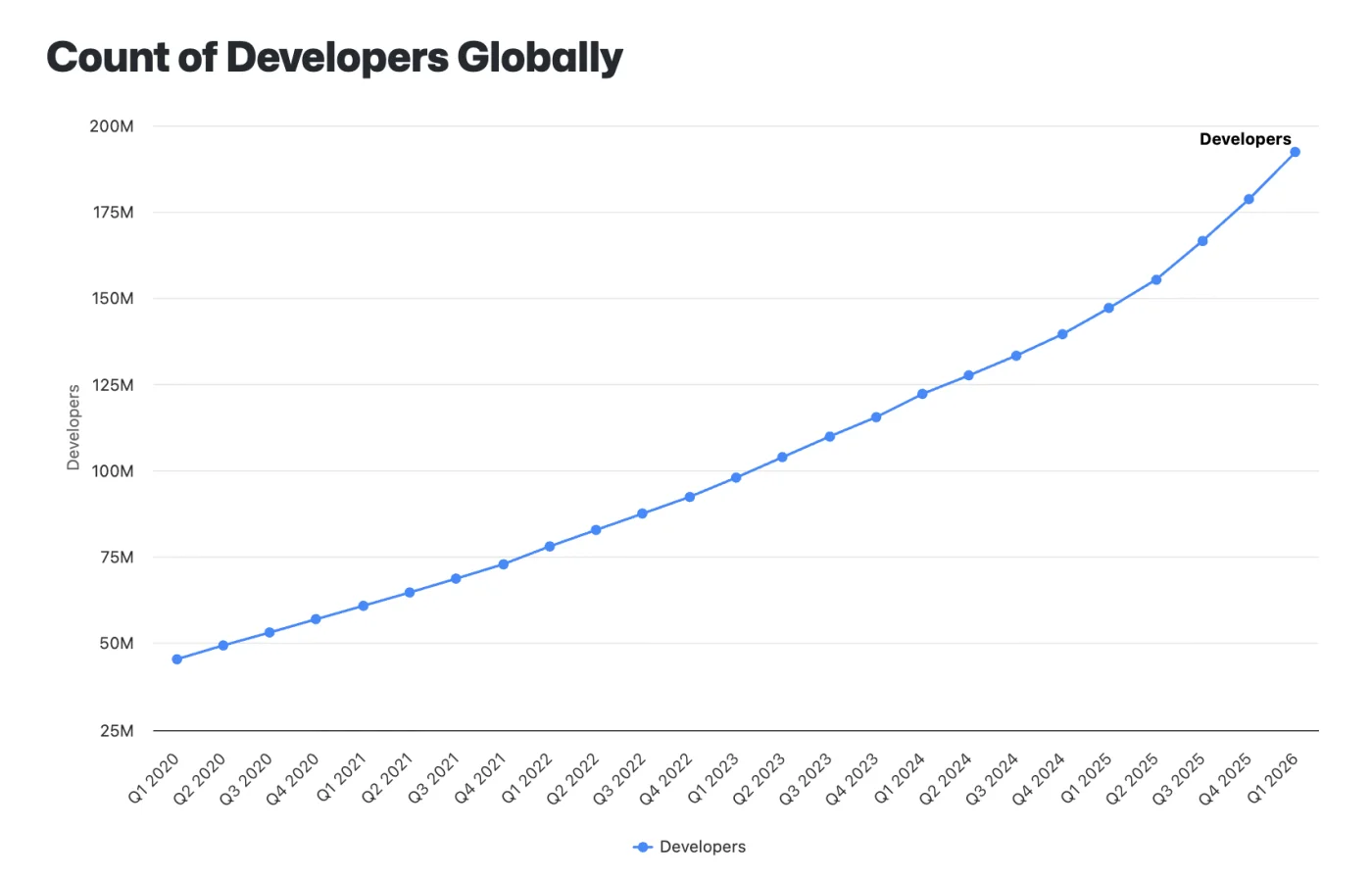 Global developer count via the GitHub Innovation Graph
Official employment surveys, like those published by IPUMS, suggest that the number of professional software developers in the US is not on the decline, but rather continues to grow and even reached an all-time high in 2026.
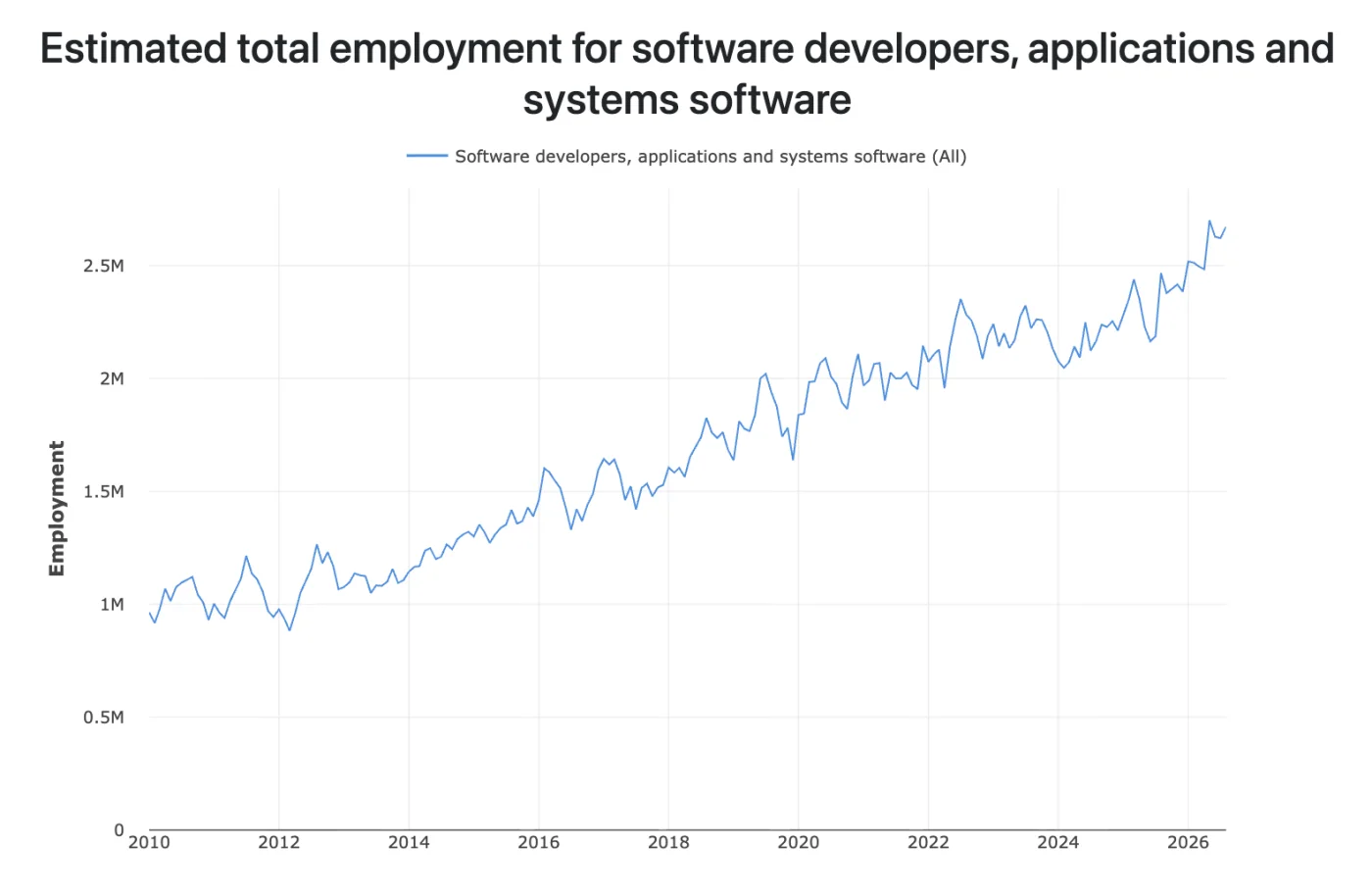 Estimated total employment for US software developers via IPUMS
Even the story at universities doesn't seem as negative as you'd expect. Princeton publishes detailed statistics on student majors every year. Computer Science remained the #1 most popular major among upperclassmen by a healthy margin in 2025-2026. Engineering as a whole continues to grow, particularly electrical engineering departments.
I think when people talk about the end of software engineering, what they really want to talk about is its sudden democratization and ubiquity. I'm struggling to decide if this is even the contradiction that I'm making it out to be, or simply two sides of the same coin. The triple threat of AI automation, oversupply of CS majors, and lower barrier to entry might mean that software engineering is simultaneously more popular than ever and doomed.
Will software developers, as we know them, evolve and adapt? Or will they follow the fate of the passenger pigeon: everywhere you look one day, and then suddenly—gone.
Note: You could also argue that AI is a new computing paradigm that doesn't require traditional software at all–I'll save this for next time.